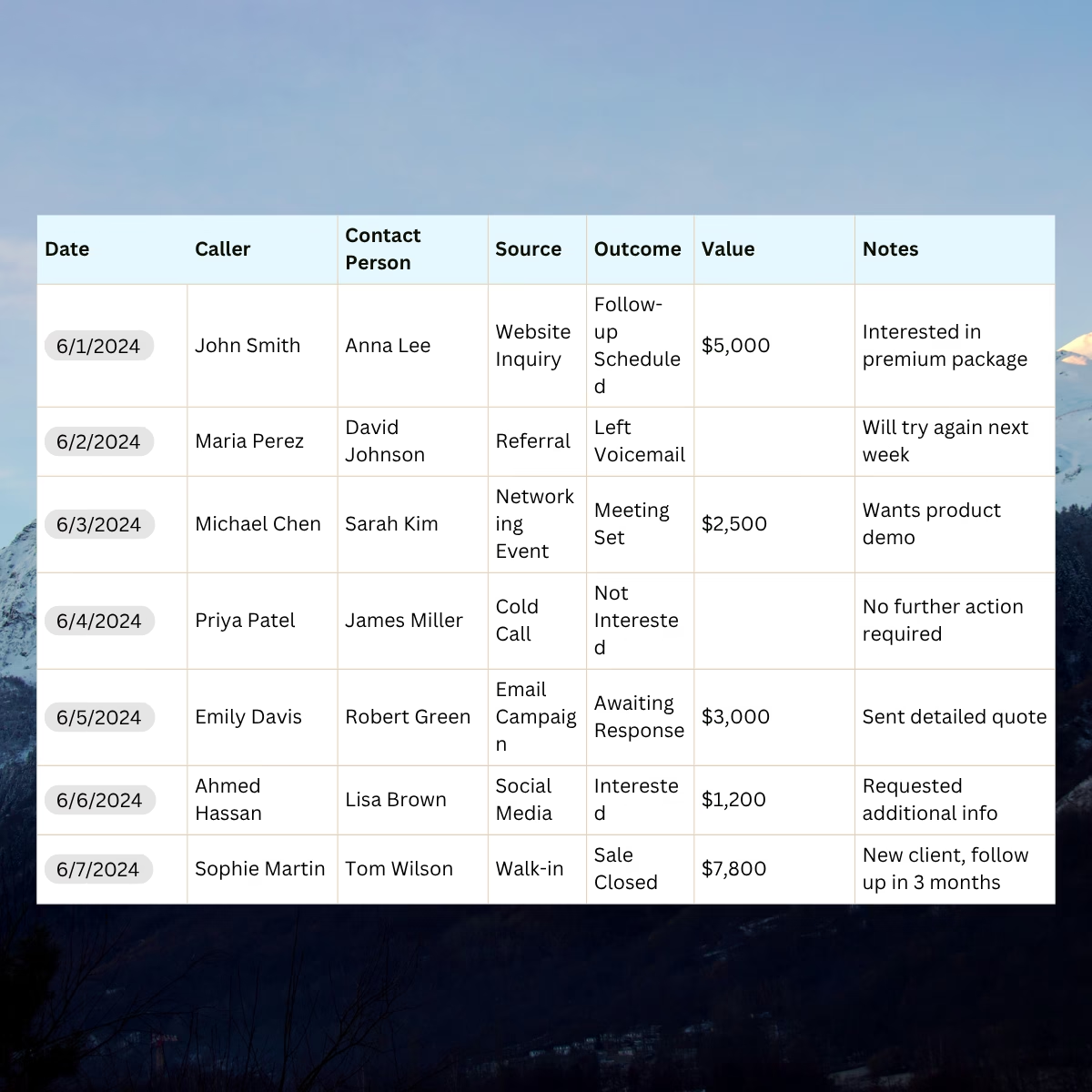
Call tracking has already told you who called, when, and from which campaign. Call intelligence goes one step further and tells you what actually happened on the call, why it matters, and what to do next.
At Nimbata, we describe our platform as ‘call intelligence built for teams obsessed with growth‘ that ‘turns every phone call into measurable revenue.‘ And in our own guide we’re very explicit: “The future of call tracking is call intelligence… the new generation of call tracking platforms focuses on what happens during the customer call. It takes a conversation and turns it into call data that it then converts into business intelligence.“
In this article we break down what call intelligence is, how it differs from standard call tracking and conversational intelligence, and how and why teams use it for their business, plus, we offer tips on selecting the best call intelligence software based on your needs.
What is Call Intelligence?
Call intelligence is the process of turning regular, daily phone conversations into structured, usable data to inform your decisions. The call intelligence software records the call, transcribes it, and uses AI to highlight the intent, sentiment, outcome, and value that’s hidden inside the dialogue. Traditional call tracking stops when you identify the person that called and the campaign that led them to you. Call intelligence goes a few steps further by contextualizing the discussion that’s taken place and how and why it matters for your business.
Inside Nimbata, call intelligence is built on features that already exist across our platform. Teams can review call recordings, read full transcriptions, skim AI summaries, and pick up the most important keywords and phrases without listening to audio files. AI outcomes, workflows, call notes and values create a clear post-call plan for you to follow. As a marketer, you uncover what drives growth; as a sales team member, you get context on lead quality and, if you work in CX, you and your team finally understand where customers need more support.
All of this is grounded in one thing; the words spoken during the call.
Call Intelligence vs Call Tracking vs Conversation Intelligence
What Call Tracking does
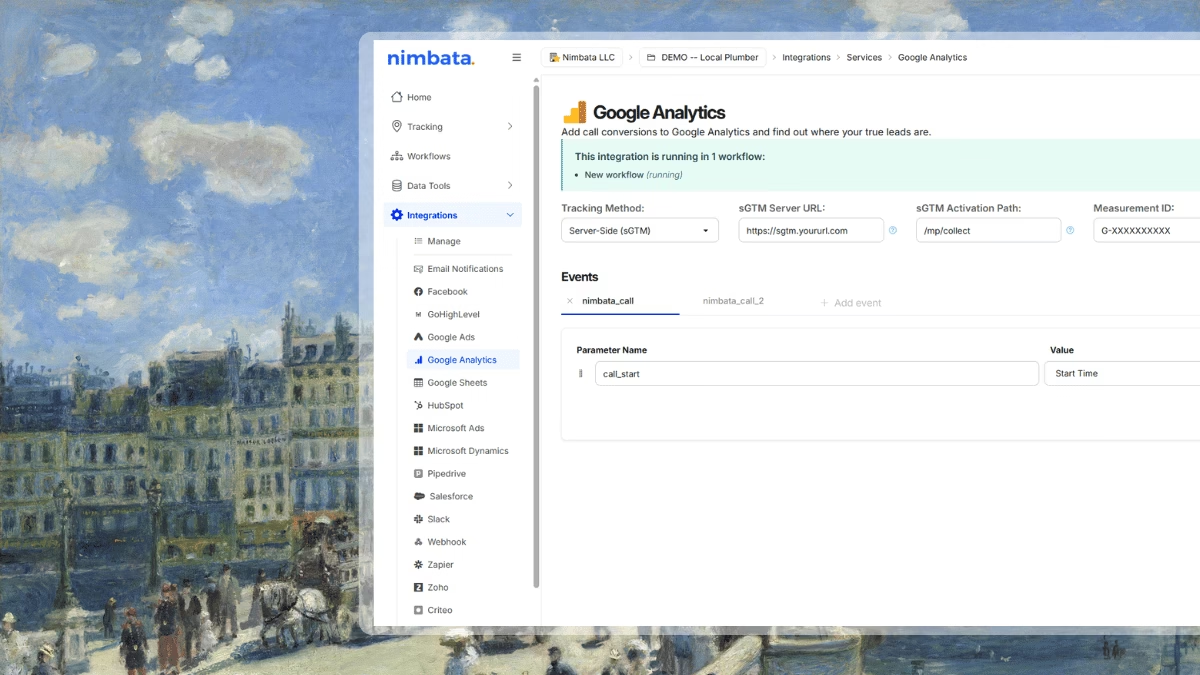
Call tracking helps you understand the path that leads someone to pick up the phone. Nimbata does this through dynamic number insertion, campaign attribution, session tracking, and detailed call analytics. You learn who called, what brought them there, and which marketing activities deserve credit. You can also send this data into GA4 and Google Ads to report conversions accurately. Call tracking gives you the essentials that help measure performance.
What Call Intelligence adds
Call intelligence builds on top of that foundation. Instead of stopping at the ring or the source, it examines the conversation itself. Nimbata provides transcriptions, AI summaries, keyword detection, classified outcomes, and AI-generated call values. These insights explain why a caller reached out, whether they were a strong lead, what they were looking for, and how the call ended. This is the shift we highlight in our own call tracking guide that shows how intelligence is becoming the natural next step.
Where Conversation Intelligence fits
Conversation intelligence covers a wider set of spoken interactions. Our Conversation Intelligence page explains that the AI captures and organizes every conversation, including calls and meetings, and then generates summaries. Think of it as a layer above call intelligence. Call tracking provides attribution. Call intelligence provides insight into phone conversations. Conversation intelligence expands analysis across more touchpoints.
What Call Intelligence adds to the mix
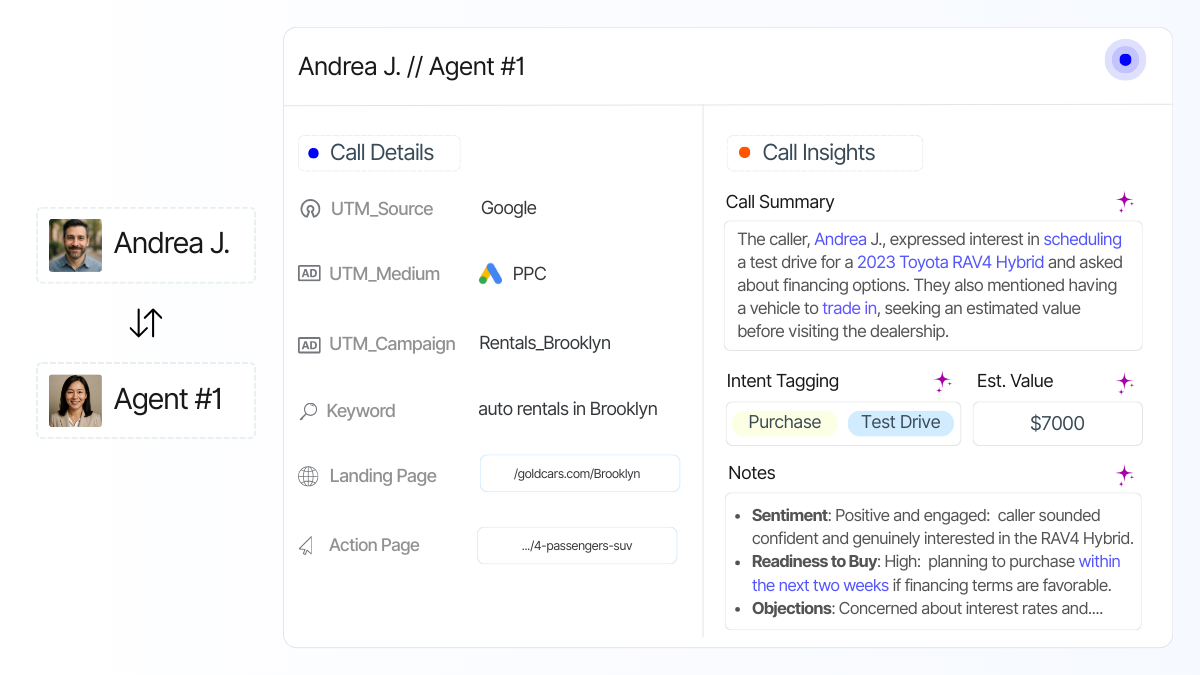
Across Nimbata and other vendors’ definitions, call intelligence goes further by focusing on what was said and what it means. In Nimbata, the “intelligence” layer is visible in features like:
- Call recordings & transcriptions
- AI-generated call summaries & notes
- Keyword and phrase spotting
- AI-powered outcomes and classification
- AI-assigned call values
- Analytics & Workflows that turn insights into automated actions
That’s why our What is Call Tracking guide literally describes call intelligence as the next generation of call tracking, focused on what happens during the conversation itself.
Where Conversation Intelligence fits
On our Conversation Intelligence page, we talk about ‘AI conversation intelligence software’ that captures, structures, and summarizes every conversation automatically, not just phone calls. So you can think of it like this:
- Call tracking equals attribution: who called, from where, and when.
- Call intelligence equals call-centric insights: what happened during the call and what it’s worth.
- Conversation intelligence equals channel-agnostic insights: phone, chat, and meetings, captured and summarized by AI.
How Call Intelligence works (Step-by-step guide)
Different vendors explain the journey slightly differently, but the core pipeline is the same; capture > transcribe > analyze > activate. Nimbata implements that pipeline using the stack you already see across our product and feature pages.
1. Capture: Every call and every signal
Every insight begins with accurate call capture. Nimbata records inbound calls and collects the metadata around them, which includes campaigns, keywords, and visitor journeys. This foundation makes the analysis meaningful because the full context of how the caller arrived is already in place.
2. Transcribe & enrich: Turning audio into data
Once a call is recorded, it becomes readable. Nimbata creates transcriptions and AI summaries so teams can understand what happened without replaying audio files. Important keywords and topics appear automatically. The call is enriched with the right context, which makes deeper analysis possible.
3. Analyze with AI: From transcript to insight
At this stage, the AI evaluates what was said. In Nimbata, the AI identifies intent, highlights sentiment cues, detects recurring phrases, and identifies call outcomes. It also assigns call values that estimate the potential business impact of each conversation. This transforms raw audio into information teams can use to qualify leads, refine campaigns, and improve performance.
4. Activate: From conversation insights to revenue outcomes
The final step is to take action. With Nimbata, call intelligence flows into CRM fields, analytics tools, and advertising platforms. You can create automated follow ups through Analytics and Workflows, send offline conversions to Google Ads, and trigger updates based on what happened inside the call. The insights become part of your daily operations, rather than something you review once a month.
Key features of Call Intelligence
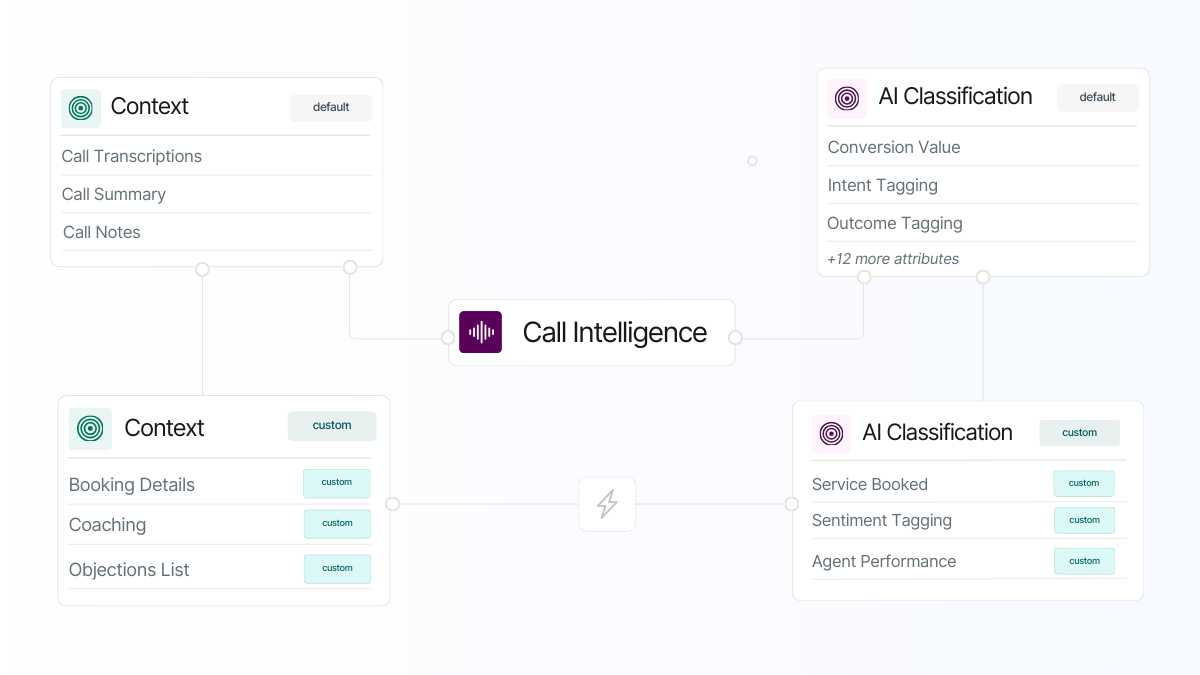
If you look at how vendors like Claap, Iovox, Calilio and others describe call intelligence, common features always include recording, transcription, analysis, and insights. On the Nimbata side, you can safely expect:
- Call recordings: Record and revisit all answered calls.
- Transcriptions: Readable text for every conversation.
- AI call summaries: Turn long conversations into concise, actionable insights and skip the replay.
- Keyword & phrase spotting: Surface important topics and recurring themes.
- AI call classification & outcomes: Our AI call tracking content shows automated classification of lead quality and call results.
- Call Values: AI assigns real call values based on conversation, so you can act on high-value leads and scale what drives revenue.
- Analytics & Workflows: Automate the full post call journey by turning conversation insights into actions.
- Reporting: Analyze performance with customizable dashboards and analytics reports.
These are the building blocks any serious call intelligence stack should have – and they’re already live in Nimbata’s product today.
Benefits of Call Intelligence software for Marketing, Sales & CX
For marketing teams
Marketing teams want to know which campaigns bring in revenue, not just calls. Call intelligence gives them the clarity they need. By combining call outcomes, call values, and attribution, Nimbata helps marketers see which efforts generate high quality leads. With GA4 and Google Ads integrations, teams can send better signals to their bidding strategies and reduce wasted spend.
For sales and revenue teams
Sales teams rely on context. Call intelligence provides it by summarizing every conversation and identifying who is genuinely interested. AI summaries, transcriptions, and outcome detection help reps understand the caller’s situation quickly. Managers can coach more effectively because they can review real conversations and see patterns in how leads respond.
For CX and operations
CX and operations teams use call intelligence to surface patterns in customer expectations and frustrations. By reviewing sentiment cues and recurring themes, they can improve call handling and refine processes. In multi location setups, Nimbata highlights differences in call performance that help brands maintain a consistent customer experience.
Call Intelligence real-world use cases
Paid search and performance marketing
Marketers who depend on paid search need more than call volume. They need to understand which campaigns led to valuable conversations. With AI summaries, call values, and offline conversions, Nimbata helps performance teams optimize based on the quality of leads. They can tell which keywords bring in buyers rather than browsers and adjust budgets accordingly.
Multi-location businesses
Businesses with multiple branches rely heavily on inbound calls. Call intelligence reveals how each location performs by analyzing call quality, outcomes, and value. Managers can see which locations convert well and which ones need support. This leads to more consistent service across all branches.
Agencies proving ROI
Agencies often need deeper proof of value for their clients. Call intelligence makes this easier. With transcriptions, AI summaries, call values, and campaign attribution, agencies can clearly show which efforts produced high quality calls. Integrations and webhooks allow them to deliver these insights directly into their clients workflows and CRMs.
How to choose the best Call Intelligence software
When you compare call intelligence tools (ours and others), you’ll see similar themes. Based on vendor guides plus Nimbata’s own product, it’s worth focusing on a few non-negotiables.
1. Depth of AI
Look for:
- Reliable transcriptions
- AI summaries that you actually read
- Smart classification and outcomes
- Call values or equivalent revenue attribution
Nimbata ships all of these: call recordings, transcriptions, AI call summaries, AI outcomes, and AI-assigned call values.
2. Attribution + Intelligence
Our own What is call tracking guide frames call intelligence as the future of tracking. You want a platform that:
- Covers dynamic number insertion, multi-channel attribution, and GA4/Ads integrations
- Adds an intelligence layer on top: insights, automation, and revenue reporting
3. Integrations & Workflows
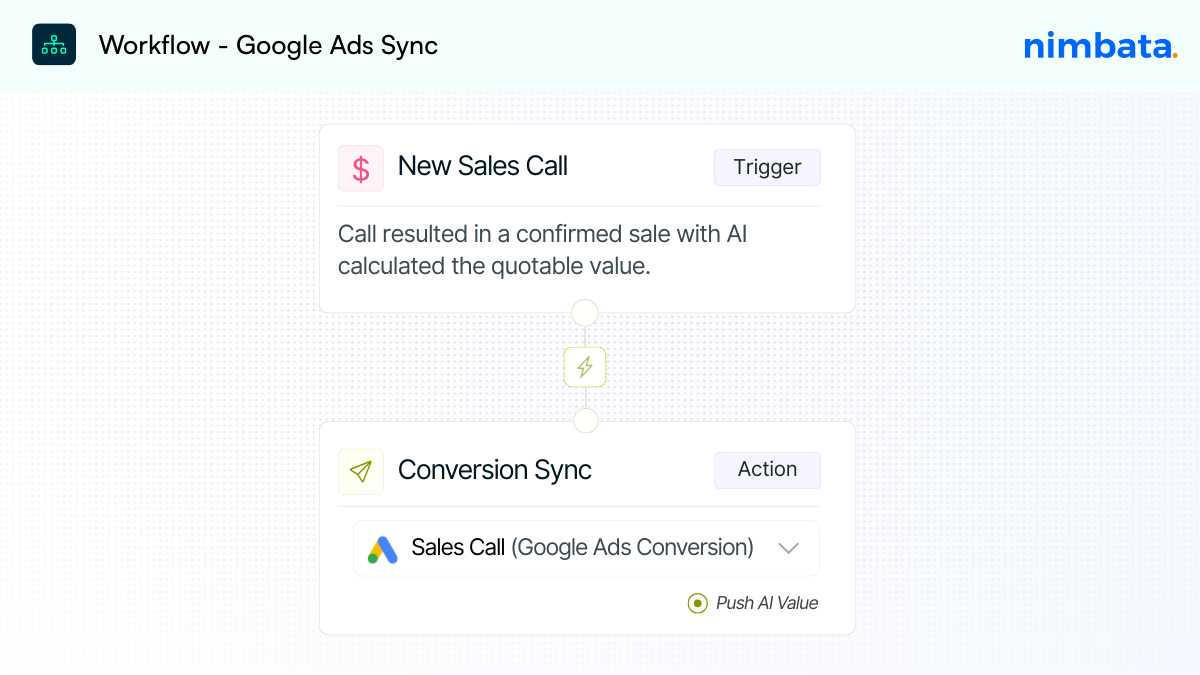
Call intelligence has max impact when it plugs into your stack. First, Nimbata integrates with Google Ads, GA4, CRMs, analytics tools and more, with webhooks for custom workflows. Then, Analytics & Workflows automate the journey from conversation insights to CRM updates and conversions.
4. Flexibility & UX
On our CallRail alternative and features pages, we emphasize flexible workflows, custom reports, and logic designed to match your way of working. You want a call intelligence command center that your team actually likes using.
Implementing Call Intelligence best practices
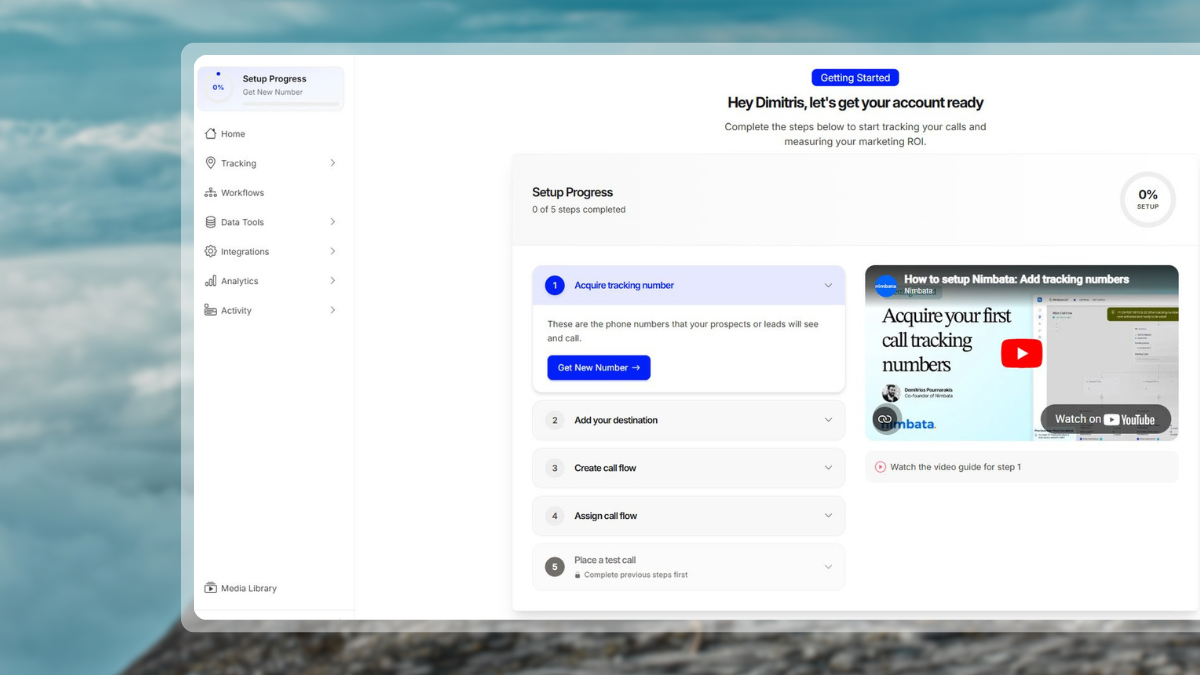
Implementation guides across the industry all say the same thing: start simple, align on goals, and let AI handle the heavy lifting. Here’s a practical path that matches Nimbata’s product:
- Start with solid call tracking
- Set up dynamic number insertion and make sure attribution is accurate.
- Enable AI call tracking & conversation intelligence
- Turn on recordings, transcriptions, and AI summaries.
- Add Call Values and outcomes
- Let Nimbata’s AI assign real values to calls and detect outcomes automatically where possible.
- Sync insights into your stack
- Connect Google Ads, GA4, CRM, and reporting tools so call intelligence flows downstream.
- Build Workflows
- Use Analytics & Workflows to trigger follow-ups, updates, and alerts from call intelligence signals.
- Continuously refine
- Use our AI scoring/analyzing calls and conversational analytics guides as playbooks to refine how you tag, score, and act on conversations over time.
Why smart teams choose Call Intelligence over call tracking alone
Our own What is Call Tracking guide says it plainly: The future of call tracking is Call Intelligence.
Traditional call tracking:
- Shows that campaigns generated calls
- Attributes those calls to channels and keywords
- Helps marketers prove basic ROI
Call intelligence with Nimbata:
- Shows what happened on those calls
- Uses AI to understand intent, quality, and outcomes
- Assigns real values to conversations
- Sends better signals back into Google Ads, CRMs, and analytics tools
- Automates the entire post-call journey, from insights to conversions
It’s the difference between ‘We generated 200 calls from our campaigns this month’ and ‘These 42 calls drove the majority of pipeline and revenue; and here’s exactly which campaigns, keywords, and conversations made it happen.’
Call Intelligence is just a click away
Flexible Product, Expert Support, Transparent Pricing.
FAQ on Call Intelligence
Call intelligence is the process of recording, transcribing, and analyzing phone calls so teams can understand intent, sentiment, outcomes, and value. It goes beyond call tracking by focusing on what happens during the conversation. Nimbata provides call recordings, transcriptions, AI summaries, outcomes, and call values to turn calls into actionable insights.
Call tracking identifies who called, from where, and which campaign drove the call. Call intelligence adds analysis of the conversation itself. In Nimbata, this includes transcriptions, AI summaries, outcome detection, and call values that reveal lead quality and revenue potential. Tracking explains the source. Intelligence explains the impact.
Call intelligence works by capturing inbound calls, converting them into text, analyzing the conversation with AI, and activating the insights across your tools. Nimbata records calls, creates transcriptions and AI summaries, identifies keywords and outcomes, assigns call values, and pushes this intelligence into CRMs, GA4, Google Ads, and workflows.
Call intelligence provides insights into caller intent, sentiment cues, questions asked, objection patterns, call outcomes, and potential revenue. With Nimbata, teams also receive AI summaries, keyword highlights, and call values that show which calls are high quality. These insights help optimize campaigns, qualify leads, and improve customer experience.
Marketers use call intelligence to see which campaigns drive quality conversations, not just call volume. Nimbata combines call attribution with AI summaries, outcomes, and call values so teams can identify high-value keywords and channels. These signals can be synced to Google Ads and GA4 to improve bidding strategies and reduce wasted spend.
Nimbata’s AI analyzes every call to generate summaries, detect important phrases, identify call outcomes, and assign call values. These insights help qualify leads, surface intent, and understand call quality at a glance. Teams can then automate updates, follow-ups, and conversions through Analytics and Workflows and connected integrations.
Marketing, sales, and CX teams benefit most from call intelligence. Marketers learn which campaigns drive high-value leads. Sales teams get context from AI summaries and outcomes to prioritize follow-ups. CX and operations uncover sentiment cues and recurring issues. In multi-location businesses, Nimbata highlights performance differences across branches.