Call tracking and sales call analytics are nothing new. They’ve been around for decades. But, what started as a simple collection of basic data like caller ID, location, and phone number, has steadily evolved. Today, sales call analytics offer a vast array of insights that businesses can use to optimize campaigns, improve customer experiences, and drive measurable results.
Here’s how you can leverage call tracking and sales call analytics to elevate your marketing strategy and stay ahead of the competition.
1. Optimize advertising campaigns with data-driven insights
Marketing is much more complex now than in the past. The channels and touchpoints have multiplied and determining which ones work and which ones don’t, is not as easy as it used to be. Don’t get me wrong, it never was a simple process, but ask any modern CMO or performance marketer and they will tell you how hard it can be to keep track of all their marketing channels at the same time.
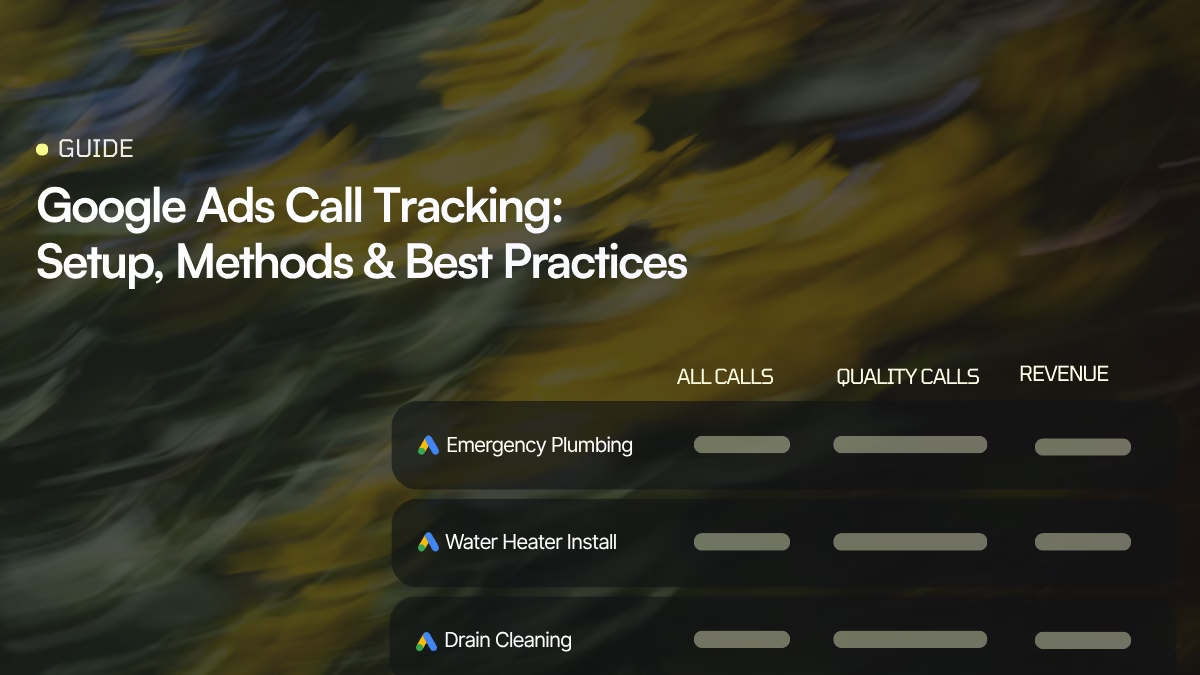
This is the number one reason, marketers turn to call tracking and its sales call analytics. Phone calls are still a lucrative lead source and call tracking is the only way for professionals to gain visibility into which campaigns, ads, and keywords are driving them. Well, yeah there is Excel too, but good luck trying to log every call and their outcome on a sheet and determining whether your campaigns are effective.
With call tracking and sales call analytics, you can identify which PPC ads are not only generating clicks but also prompting customers to pick up the phone and engage with your business. Armed with this data, you can allocate your budget more effectively, double down on high-performing campaigns, and eliminate underperforming ones.

2. Qualify your leads to maximize marketing ROI
In an ideal world, your marketing budget would be infinite and you could chase after every lead that comes your way. But, in such a world, you probably wouldn’t need to attract leads in the first place.
Every dollar counts and with call tracking you can qualify leads more effectively by providing insights into caller intent and behavior. By analyzing call data, you can determine which leads are most likely to convert and which require a different approach. For instance, you can track which marketing channels are driving high-intent calls and prioritize those channels in your strategy. Additionally, sales call analytics allows you to segment callers based on their needs, enabling you to tailor your messaging and follow-up strategies for better results.

3. Map the customer journey with precision
Marketers long for a clear view of the customer journey. It’s the key to creating personalized experiences that drive engagement and loyalty. However, with consumers interacting across multiple channels, piecing together their journey can be challenging.
Call tracking provides a clearer picture of how customers move through the sales funnel. By analyzing call data, you can identify patterns in customer behavior, such as which touchpoints are most influential in driving calls and conversions. This type of sales call analytics allows you to refine your marketing strategy, create more targeted campaigns, and deliver personalized offers that resonate with your audience.
4. Discover potential growth opportunities through data
Call tracking and sales call analytics enable you to make smarter marketing decisions with powerful features that allow you to focus on consumer behavior with data. By analyzing call data, you can identify new target audiences, discover underutilized marketing channels, and even uncover gaps in your current strategy.
For example, if you notice a high volume of calls coming from a specific geographic region or demographic, you can tailor your campaigns to better serve that audience. Similarly, call tracking can help you identify which creatives or messaging are most effective at driving engagement, enabling you to refine your campaigns for better results.

5. Boost outreach through omnichannel marketing
Another key reason sales call analytics are important, is because you’re putting your organization at a better competitive advantage if you market to your customers through unique attributes. Sales call analytics plays a crucial role in unifying your marketing efforts by providing a holistic view of customer interactions.
With features like call tagging, routing, and tracking, you can ensure that every call is handled effectively and aligned with your broader marketing strategy. For example, you can route calls to specific teams based on the campaign that drove them, ensuring that customers receive a consistent and personalized experience. This level of integration not only improves customer satisfaction but also strengthens your brand’s reputation.
The +1 we promised. Stay ahead of the competition with sales call analytics
The market is moving fast. Agility is key. Call tracking and sales call analytics provide real-time insights that enable you to adapt quickly to changing customer needs and market conditions. By monitoring call data, you can identify emerging trends, respond to customer feedback, and optimize your campaigns on the fly.
This ability to act quickly and decisively gives you a competitive edge, allowing you to stay one step ahead of your competitors and deliver exceptional results for your business.
Takeaway
By leveraging the insights provided by call tracking, marketing professionals can optimize campaigns, improve customer experiences, and drive measurable growth.
For CMOs, performance marketers, and digital marketers, the question isn’t whether you can afford to invest in call tracking. It’s whether you can afford not to. In a world where data is king, call tracking provides the insights you need to make smarter decisions, maximize your ROI, and achieve your marketing goals.
Frequently Asked Questions about the benefits of sales call analytics
Sales call analytics are crucial because phone calls remain a high-intent lead source. Many customers prefer calling businesses for inquiries or purchases, especially in industries like healthcare, real estate, and automotive. Call tracking helps marketers:
Measure the effectiveness of campaigns driving calls.
Qualify leads more effectively.
Understand the customer journey across multiple touchpoints.
Optimize advertising spending for better ROI.
Call tracking provides data-driven insights into which campaigns, ads, and keywords are driving phone calls. For example:
You can identify which PPC ads are not only generating clicks but also prompting customers to call.
You can allocate your budget to high-performing campaigns and pause underperforming ones.
By understanding which channels drive the most calls, you can refine your strategy to focus on what works best.
Yes, sales call analytics help qualify leads by providing insights into caller intent and behavior. For instance:
You can determine which leads are most likely to convert based on their interaction with your campaigns.
You can segment callers by their needs and tailor follow-up strategies accordingly.
By prioritizing high-intent leads, you can maximize your marketing ROI and focus on the most promising opportunities.
Sales call analytics provide a clearer picture of how customers move through the sales funnel by:
Identifying which touchpoints (e.g., ads, social media, or email campaigns) are most influential in driving calls.
Revealing patterns in customer behavior, such as common pain points or preferences.
Enabling marketers to create more personalized and targeted campaigns that resonate with their audience.
Absolutely. Call tracking and sales call analytics can reveal untapped growth opportunities by:
Identifying new target audiences or geographic regions with high call volumes.
Highlighting underutilized marketing channels that drive engagement.
Uncovering gaps in your current strategy, such as ineffective creatives or messaging, so you can refine them for better results.
Sales call analytics improve ROI by:
Helping you allocate your budget to high-performing campaigns and channels.
Qualifying leads more effectively, so you focus on the most promising opportunities.
Providing insights to refine your marketing strategy and deliver personalized experiences that drive conversions.