Let’s be real.
Nobody enjoys talking about cookies or learn about first party data – don’t get me talking about second, third and zero party data.
Marketing is and should be all about creativity and smart ideas.
But, in today’s age, you NEED to know this stuff, or you’ll fall behind the competition.
So, get ready because in this article, we’ll break down everything you need to know about first-party data and how you can use it to score more leads and become a marketing rockstar 🤟.
The problem with third party data – the end of an era
Third-party tracking cookies?
Yeah, they’re pretty much dead. Since 2018, they’ve been losing their edge.
Now, most browsers block them and with GDPR and CCPA in play, tracking people is tougher than ever.
Google Chrome will also restrict them completely in the second half of 2024.
This marks a fundamental shift in marketing!
Small businesses and brands need to adapt and change their approach!
The solution? First Party and Zero Party Data!

What are First Party Data?
Before we go into further details let’s clear the air with a formal but easy definition.
When customers visit your website, or talk to you on your social media profiles, you can collect information about their behavior.
But remember, collecting this data requires their consent and transparency to keep things above board with privacy laws!
First Party vs. Third Party Cookies
Before we share how you can take advantage of First party and Zero party data let’s explain how companies collect this information and what the difference is with third party cookies.
First-party cookies are small pieces of data created by the website you’re currently browsing. They track your activity solely within that site.
These cookies are indispensable for several reasons: they keep you logged in as you navigate different pages, remember items you’ve viewed, and suggest actions based on your previous interactions.
Without them, your online experience would be fragmented and less personalized.
Third-party cookies on the other hand, are small pieces of data that let websites track users as they move across different domains.
For example, if you’re browsing for a certain product on a website, another company can place a third-party cookie on your browser.
This cookie tracks your session data, such as the items or pages you view and the time you spend on the site.
Later, that company can sell this tracked information to advertisers or other interested parties.
Sneaky right?
That’s why browsers now block them!
What are Zero Party Data?
Did you know you might be sitting in a goldmine of data that requires zero consent to be obtained?
When customers share information through phone calls and forms, it’s called zero-party data. No guessing needed, no consent required!
Why the end of Third Party cookies makes Zero and First Party Data important
The martech ecosystem has been extensively developed around the use of third-party cookies, enabling advertisers to track and understand audience behavior, including their geographic location, personal interests, websites visited, and products purchased.
But marketing is changing and evolving.
Don’t get your hopes down – there’s a silver lining.
You can still leverage customer data to shape your advertising strategy, even without third-party data.
The secret?
Get closer to your customers.
Forget relying on ad tech partners.
Instead, draw customers to your site, engage them deeply, and invite them to share their information with you voluntarily!
5 ways to use Zero and First Party Data to drive more leads!
To tackle the challenge posed by the loss of third-party cookies, ramp up your collection of valuable first and zero-party data.
Here’s how.
#1: Track ALL leads.
Before you shout “Thank you captain obvious”, hear me out!

When you track only form completions or sign-ups, you miss out on the full story.
Add phone calls to the mix, and you’ll easily see which digital channels are getting people to call.
It’s a no-brainer for better reporting!
#2: Track leads to revenue
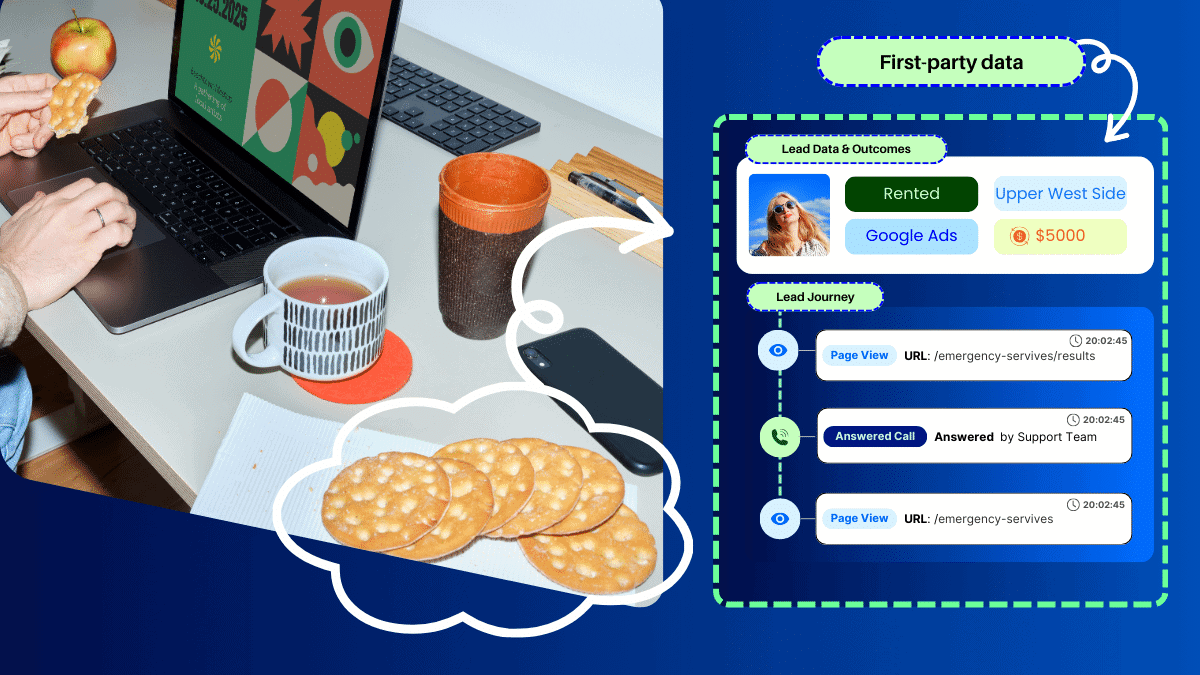
By attributing closed revenue back to specific campaigns and channels, you can understand the role of phone calls and forms in the customer journey and determine which marketing actions are driving high-quality leads!
Now you know what works and where to focus.
#3: Customer conversations = Your marketing goldmine.
Creating content that connects with your audience is critical for marketing.
But where do you find such content?
Sure, customer reviews and social media comments are good starting points, but there’s a game-changer.
Phone call conversations.

These interactions breathe life into your brainstorming sessions, offering unique, personalized insights.
They uncover hidden pain points, spark new questions, highlight trends, and even expose competitor strategies.
Dive into your customer’s conversations and transform your content with high-intent insights!
#4: Sharing is caring. Send data to your marketing stack.
Don’t hoard the lead tracking spotlight!
Share this valuable data with your teams working on other platforms.
By integrating call and form tracking data into CRMs and other tools, you’ll make their jobs easier and achieve remarkable business results.
Be the hero your team deserves and see the positive impact on your business.
#5: Double down on efforts that provenly work.
Time to give yourself a pat on the back!
By feeding the algorithm the right lead data, you can now kick back and enjoy the payoff.
More leads and more revenue are headed your way!
Conclusion
Make your marketing better and prepare for 2025 now, before those third-party cookies go away.
After all who needs them anyway?
If you heavily rely on phone calls, Nimbata can help you discover what brings in your most high value leads by simply setting up properly your call conversion tracking.Feel free to register for our 2-Week Premium Trial in order to test out our product and see if it fits your needs – no CC required.Otherwise, feel free to contact us and we will walk you through the platform!
FAQ
Businesses can collect first-party data through various methods, including:
1) Website Analytics: Tracking user behavior on websites using tools like Microsoft Clarity
2) CRM Systems: Storing customer information gathered during sales and support interactions to CRMs like HubSpot.
3) Email Marketing: Collecting data from email sign-ups and tracking engagement with email campaigns.
4) Surveys and Feedback Forms: Directly asking customers for their preferences.
5) Social Media Engagement: Monitoring interactions on social media platforms.
6) Call Tracking: Attributing calls to visitor sessions.
First-party data and third-party data differ in several key ways:
1) Source: First-party data is collected directly from your audience, while third-party data is aggregated from various sources by external entities.
2) Accuracy: First-party data is typically more accurate and specific to your audience, whereas third-party data may be broader and less precise.
3)Cost: First-party data is generally less expensive since it is collected directly, while third-party data often requires purchasing from data providers.
4) Privacy: First-party data is more likely to comply with privacy regulations because it is collected with user consent, whereas third-party data can raise more privacy concerns.
5) Control: Businesses have full control over their first-party data, including how it is used and stored, whereas third-party data comes with limitations imposed by the provider.
Zero-party data and first-party data differ in several ways:
1) Source of Information: Zero-party data is explicitly provided by the customer, whereas first-party data is inferred from customer interactions.
2) Accuracy: Zero-party data is highly accurate since it reflects the customer’s direct input, while first-party data may require analysis and interpretation.
3) Control: Customers have complete control over zero-party data, deciding what information to share, whereas first-party data is collected by observing customer behavior.
4) Usage: Zero-party data is particularly useful for personalizing communications and offers based on stated preferences, while first-party data helps understand broader behavioral patterns.
5) Collection Method: Zero-party data collection involves direct customer engagement (surveys, preference centers), while first-party data collection happens through tracking interactions (website visits, purchases).